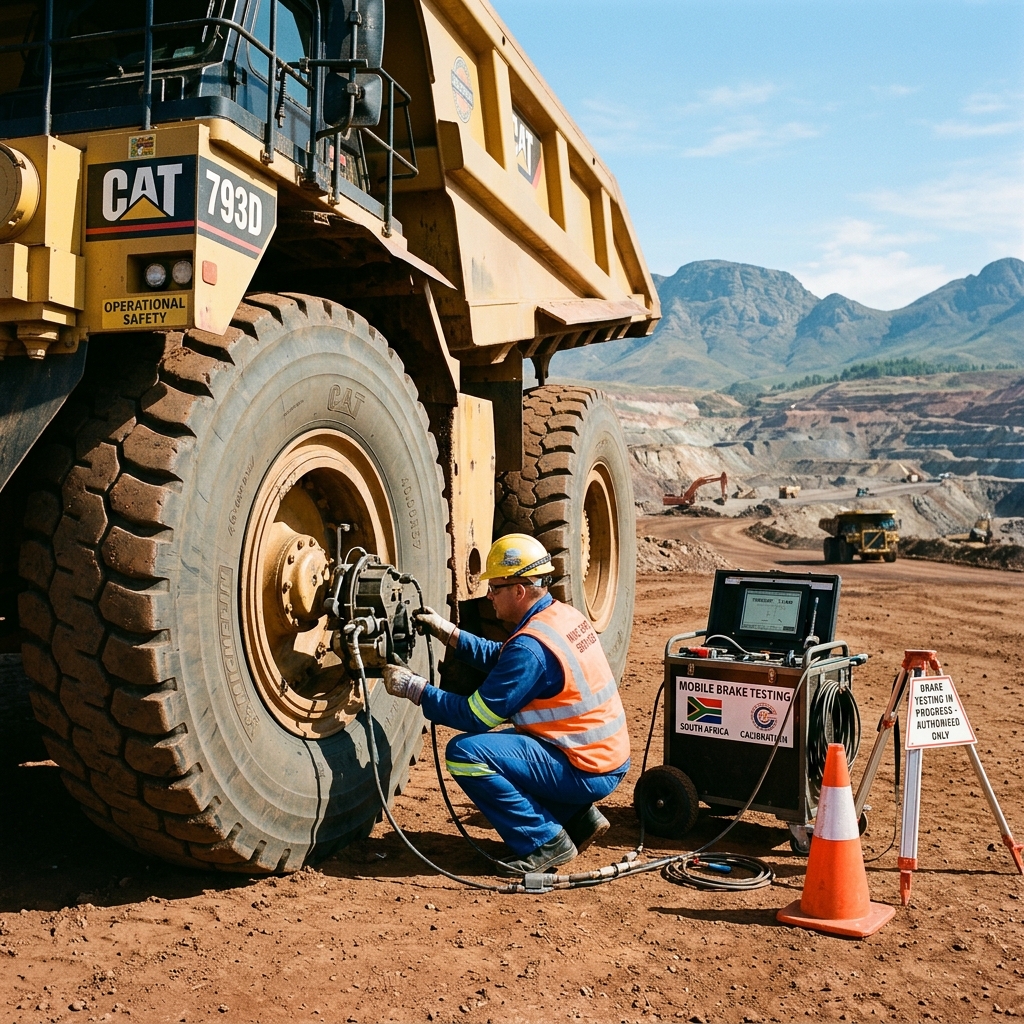
PREMIUM ON-SITE FLEET DIAGNOSTICS

Beyond Pass/Fail Brake Testing

Advanced brake, air-pressure, wheel-behaviour and rolling-resistance diagnostics for mining and transport fleets.

AMTH uses proprietary NetBrake Oracle technology to capture dynamic braking performance, OBD2/J1939 vehicle data, wireless wheel behaviour, air-brake pressure response and coast-down rolling resistance — helping fleet owners understand the behaviour behind the braking result.

ORACLE_DAEMON_v4.2.1
ACTIVE
DYNAMIC EFFICIENCY
64.2%
STOPPING DISTANCE
12.4m
AIR DELAY
180ms
WHEEL IMBALANCE
14%
NetBrake Telemetry Overlay
The Diagnostic Gap

A Brake Certificate Does Not Tell the Whole Story

Standard dynamic dynamic brake testing usually provides a result, but not enough diagnostic context. If a vehicle passes, you still don't know how close it is to failure.

Standard brake testing may not show:

  • Which specific wheel or axle contributed poorly.
  • Whether trailer air pressure response was significantly delayed.
  • Whether the emergency reservoir pressure dropped excessively during application.
  • Whether throttle, retarder, or incorrect driver input affected the test.
  • Whether excessive rolling resistance is wasting commercial fleet fuel.
  • Whether safety-critical components are slowly deteriorating over time.

NetBrake Oracle adds:

  • Multi-sensor dynamic braking evidence and stopping curves.
  • ECU / J1939 operational context validation.
  • Wireless real-time wheel behaviour & vibration data.
  • Air pressure rise, drop and recovery timing analysis.
  • Integrated coast-down drag and bearing efficiency metrics.
  • Structured historical fleet trend reports & deterioration alert lines.
Our Core Technology Platform

Proprietary Service Platform

NetBrake Oracle reveals the behaviour behind the brake result.

NetBrake Oracle is a proprietary, service-only brake intelligence platform developed for advanced on-site testing by NetBrake SA and AMTH. It is not a resale software package; it is a specialized technical service delivered directly by our expert diagnostics field crew using advanced multi-sensor hardware arrays.

Learn More About Oracle Tech
Dynamic Telemetry Inputs

One Test. Multiple Evidence Streams.

We correlate data points from 6 critical dynamic diagnostic streams to map a complete safety and compliance footprint of your fleet.

Dynamic Decelerometer

Captures dynamic speed profiles, stopping distance, stopping time, peak & average deceleration curves, SABS safety thresholds, and test validity conditions.

OBD2 / J1939 Data

Collects available engine and ECU network data such as vehicle throttle position, brake switch trigger timing, engine load status, DTC active flags, and active ABS indicators.

Wireless Wheel Sensors

Measures dynamic wheel rotation behaviour, axle-to-axle vibration, Suspected axle load imbalances, delayed wheel braking reactions, and thermal bearing profiles.

Air-Brake Pressure Sensors

Monitors critical reservoir, service air line, and emergency pneumatic test points in real time to isolate application lag, excess pressure drops, or slow recovery curves.

Coast-Down Testing

Measures mechanical rolling resistance and drag parameters when power and brake triggers are isolated, exposing dragging linings, bearing failures, or misalignment.

Cloud Fleet History

Uploads all verified dynamic testing results directly to the secure Oracle database network for compliance tracking, historic audits, and safety trend dashboards.

Strategic Value Mapping

Standard Brake Testing vs Oracle Brake Intelligence

Standard testing is designed for quick administrative compliance. Oracle is designed to identify risks, reduce downtime, and track vehicle safety health.

Evaluation Parameters Standard Brake Testing NetBrake Oracle Service
Primary Diagnostic Output Simple Pass/Fail result certificate Deep safety data evidence and historical health profiles
Capture Scope Measures one simple stop event Captures real-time multi-sensor telemetry curves
Isolating Fault Causes No capability to pinpoint underlying mechanical failure Helps pinpoint air-lines, wheel drag, retarders, or imbalances
Pneumatic Air Analysis None (assumes pressure is standard) Monitors pneumatic pressure rise and application timing lags
Mechanical Drag Diagnostics No mechanical resistance tracking Includes integrated coast-down drag analytics
Historical Auditing Requires manual paper record filing Auto-syncs records to secure fleet history database
Safety Trend Analytics Cannot map deterioration curve over months Proactively flags system wear and component safety decay
Diagnostic Differentiators

What Oracle Can Help Identify

By capturing granular sensor telemetry, our field service team can identify a wide range of hidden safety hazards and wear profiles.

Low overall stopping efficiency
Excessive stopping distance metrics
Unstable or skewed decelerometer curve
Pneumatic application response delay
Trailer braking lag (truck-to-trailer gap)
Sluggish pneumatic reservoir pressure rise
Excessive air pressure drop under load
Slow air system recovery performance
Wheel-to-wheel torque imbalances
Suspected dragging linings or shoes
Abnormal wheel hub or bearing vibration
Retarder or throttle signal interference
Drivetrain mechanical rolling resistance
Deterioration patterns against previous tests
Repeated heavy vehicle safety vulnerabilities
Operational Framework

How the NetBrake Oracle Service Works

An on-site diagnostic service that delivers high-fidelity compliance intelligence in 7 simple structured steps.

01

Vehicle Registration

Vehicle profile details (VIN, layout, fleet ID, axle arrangement, braking configuration) are logged to match design criteria.

02

Diagnostic Sensor Setup

Field technicians mount calibrated wireless wheel nodes, pressure transducers, dynamic decelerometer, and vehicle OBD link.

03

Dynamic Brake Testing

The vehicle undergoes real-world deceleration stops to capture core stopping distance, speed curves, and SABS benchmarks.

04

Diagnostic Data Collection

OBD network signals, pneumatic rise rates, and wheel rotational patterns are synchronized directly with the dynamic stopping curve.

05

Optional Coast-Down Testing

Isolates rolling resistance parameters to map mechanical binding, wheel bearing wear, and tires efficiency drag.

06

Database Sync & Cloud Upload

Dynamic data packages are uploaded to the secure Oracle database for comparison against previous safety profiles.

07

Actionable Technical Recommendations

Reports are generated instantly to provide workshop guides, flagging suspect parameters for preventative actions.

LOGISTICS & ROAD TRANSPORT

For Transport Fleets

Maximize vehicle uptime, secure roadworthiness compliance, reduce workshop margins, and trace fuel-wasting mechanical drag before safety margins decay.

  • Truck and trailer pneumatic application sync testing
  • Trailer delay, lag and jackknife risk profiles
  • SABS 0120 roadworthiness pre-test evidence
Book Transport Fleet Testing

TRUCK & TRAILER DIAGNOSTICS

HEAVY VEHICLES & TMM COMPLIANCE

For Mining Operations

Ensuring certified, highly repeatable, and fully defensible safety reporting for high-risk trackless mobile machinery (TMM) working in extreme environments.

  • Heavy utility, dumper, and excavator on-site dynamic testing
  • Dynamic gradient testing profiles
  • Defensible records for safety regulatory inspectorates
Discuss Mining Site Testing

TMM SAFETY CERTIFICATION

Fuel & Cost Efficiency

Brake Safety Is Only Part of the Story

A vehicle with dragging brake linings, misaligned axles, dry wheel bearings, or poor tire setups is directly burning unnecessary diesel and driving fleet operating margins down.

Oracle's integrated Coast-down Testing evaluates how efficiently a vehicle rolls when driving and braking power are completely isolated. By measuring speed decay steps over precise segments, we help fleet owners validate drag values, verify workshop repairs, and catch issues before mechanical failures occur.

Explore Coast-Down Testing
Verification Tool

Try the Safety Efficiency Simulator

Under legal safety codes like the SABS 0120 standard framework, service brake systems must meet a minimum efficiency benchmark. For standard logistics fleets and heavy vehicles, a minimum of 50% braking efficiency is legally required.

Enter vehicle parameters here to simulate safety standards based on Gross Vehicle Weight (GVW) and registration force profiles.

Efficiency Formula:

Efficiency (%) = (Force (kgf) / Weight (kg)) * 100

Diagnostic Inputs

kg
kgf
52.9%
Passed (SABS Compliant)
Vehicle meets the legally mandated SABS 50% safety efficiency standard. Certified safe.
予防的保全 (Preventative Action)

A Report Built for Decisions, Not Just Filing

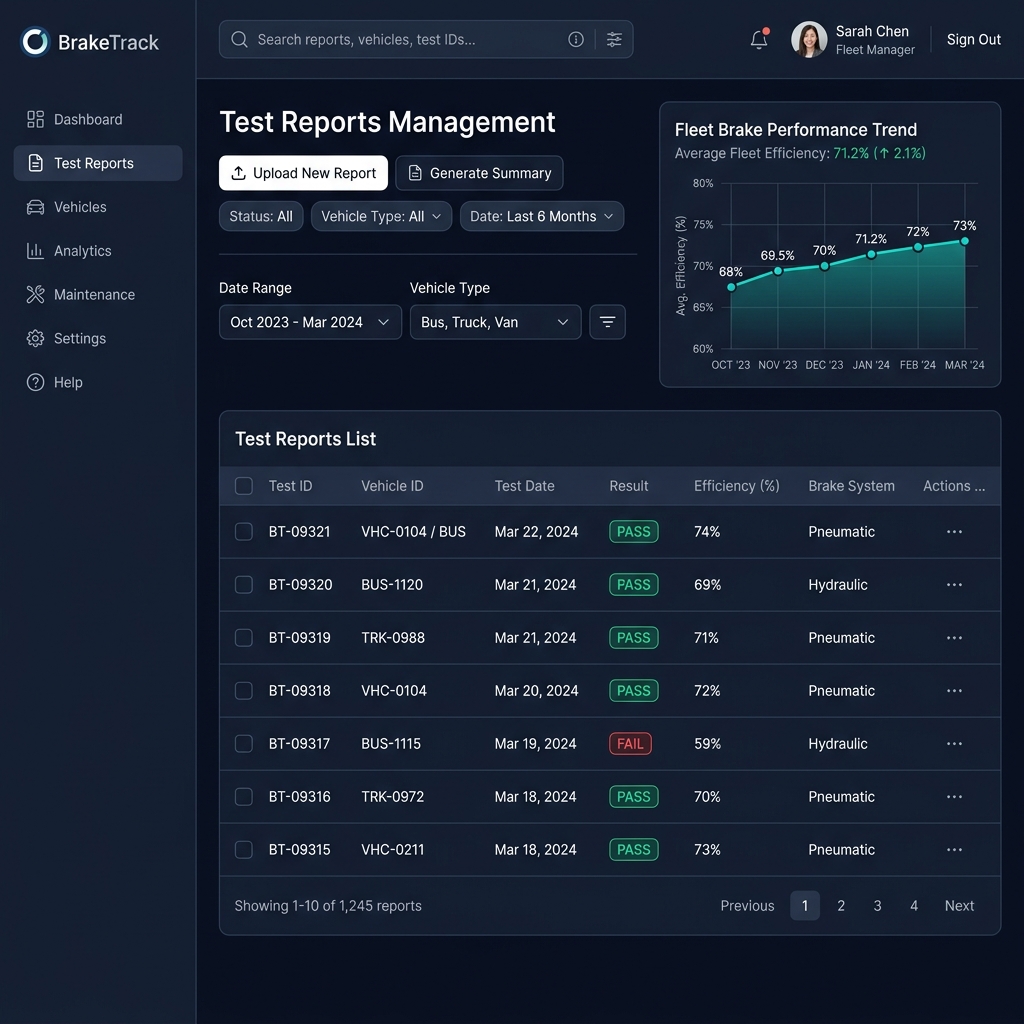
Ordinary brake tests provide a pass/fail certificate that gets filed away. Oracle reports deliver actionable mechanical findings, alerting your workshop teams to component wear, delayed valves, or axle load mismatches.

Brake Performance Curve

Tracks dynamic speed-decay and stopping distance profiles.

Air Rise Response

Measures pneumatic service air rise rates and lag times in milliseconds.

Wheel Imbalance

Flags severe axle load and rotational balance variations.

Historical Trends

Visualizes test performance over time to flag wear limits.

Request a Sample Report
DOC_ID: NBO-2026-9812 | AXLES: 3 | WEIGHT: 9200kg
Dynamic Stopping Curve
EFFICIENCY
62%
AIR DELAY
180ms
RESULT
PASS
Prevention & Lifecycle

Every Test Strengthens the Vehicle History

Unlike basic one-off brake test certificates that isolate a single stop, the NetBrake Oracle service automatically synchronizes all captured data packages to a secure cloud-based historical database. By logging each vehicle's performance over its lifecycle, we help fleet managers trace slowly decaying stopping capacity, isolate repeat component wear, identify repair effectiveness, and streamline SABS audit logs.

Vehicle historical lookup database
Wear decay trend indicators
Automated scheduled safety alerts
Future Technical Layer

Fleet Data Where the Vehicle Stands

NetBrake Oracle's structural data pipeline is pre-engineered to support advanced mobile tagging, QR code vehicle identifiers, and web-based API lookups.

In future operations, workshop mechanics or site supervisors equipped with tablet interfaces or diagnostic overlay glasses will be able to scan an active vehicle tag directly. This queries the database instantly, overlaying historical safety levels, air-pressure delays, and wear notifications on site.

Trusted Authority

Why AMTH and NetBrake SA?

We are not simple service operators. We are system developers and equipment technical specialists with deep practical experience.

OEM-Level Development

We are the creators and maintainers of specialized NetBrake dynamic decelerometers. We possess a complete root understanding of how the diagnostic gear functions.

On-Site Operations

Our dynamic site dispatch crews bring technical validation tools directly to your facilities. We respect operating schedules and minimize vehicle downtime.

Comprehensive Data Model

We don't limit safety validation to speed decelerations. We integrate air rise curves, J1939 ECU status, and rolling drag metrics in one clean diagnostic structure.

Knowledge Hub

Frequently Asked Questions

Get immediate clarity on SABS standards, diagnostic scopes, and how the NetBrake Oracle service integrates with your operations.

Is NetBrake Oracle a product I can buy?

No. NetBrake Oracle is a proprietary service-only diagnostic platform used exclusively by AMTH and NetBrake SA field service technicians for advanced on-site heavy vehicle testing services. It is not available for retail purchase.

How is Oracle different from normal dynamic brake testing?

Ordinary dynamic testing only gives a simple overall decelerometer stop result. Oracle combines dynamic stopping curves with engine J1939 ECU inputs, real-time pneumatic pressure delay curves, wireless wheel rotation sensors, and fuel-saving coast-down drag data.

Can Oracle test truck and trailer combinations?

Yes. Oracle's multi-sensor arrays are engineered specifically to monitor truck-and-trailer pneumatic sync times, helping workshop managers prevent jackknifing risk and brake application lagging in commercial transport combinations.

Can Oracle be used for mining vehicles?

Yes. Our crews provide specialized on-site dynamic testing for Trackless Mobile Machinery (TMM), utility heavy loaders, dumpers, and heavy excavation support vehicles, depending on site configurations and safety inspectorate compliance frameworks.

Does Oracle replace regular workshop inspections?

No. Oracle is a safety validation and diagnostics support platform designed to flag early-stage warnings. Mechanical repair decisions, roadworthiness compliance, and visual inspections remain the direct responsibility of qualified workshop personnel.

Does every vehicle provide OBD2 or J1939 ECU data?

No. Data streams depend entirely on vehicle age, make, engine model, and pin-access protocols. Oracle is designed to execute core dynamic decelerometer and wheel-sensor metrics even where direct ECU diagnostic ports are locked or unavailable.

What is coast-down testing?

Coast-down testing measures how a vehicle loses velocity over precise speed intervals when driving power and braking systems are completely isolated. It isolates mechanical drag coefficients, flagging dry hub bearings, binding shoes, or wheel misalignment issues.

Can we request a sample report?

Yes. You can request a sample NetBrake Oracle diagnostic report directly via our Sample Report page to view the precise formatting, deceleration graphs, pressure rise profiles, and trend logging layout.
Booking Engine

Ready to Move Beyond Basic Brake Testing?

Submit your fleet specifications below to schedule an on-site NetBrake Oracle testing dispatch or request a comprehensive diagnostic sample report.

Direct Booking Line

+27 (0) 11 482 1983

Technical Mailbox

dispatch@braketesting.co.za

Dispatch Hub

Addon Domain Hub, Midrand, Johannesburg

Diagnostic Dispatch Inquiry

ORACLE_SERVER_FEEDBACK_DAEMON
netbrake_feedback_daemon started. Listening for requests...
Waiting for lead data package submission...
[STATUS] Ready. Submit the dispatch form above to process server-side lead ingestion.